RETAIL CLEANING · NOVEMBER 16, 2026
Holiday Retail Cleaning in Minneapolis–Saint Paul: A Practical Facility Plan
A practical holiday cleaning plan for busy Twin Cities stores.
Why Holiday Retail Cleaning Needs a Different Routine
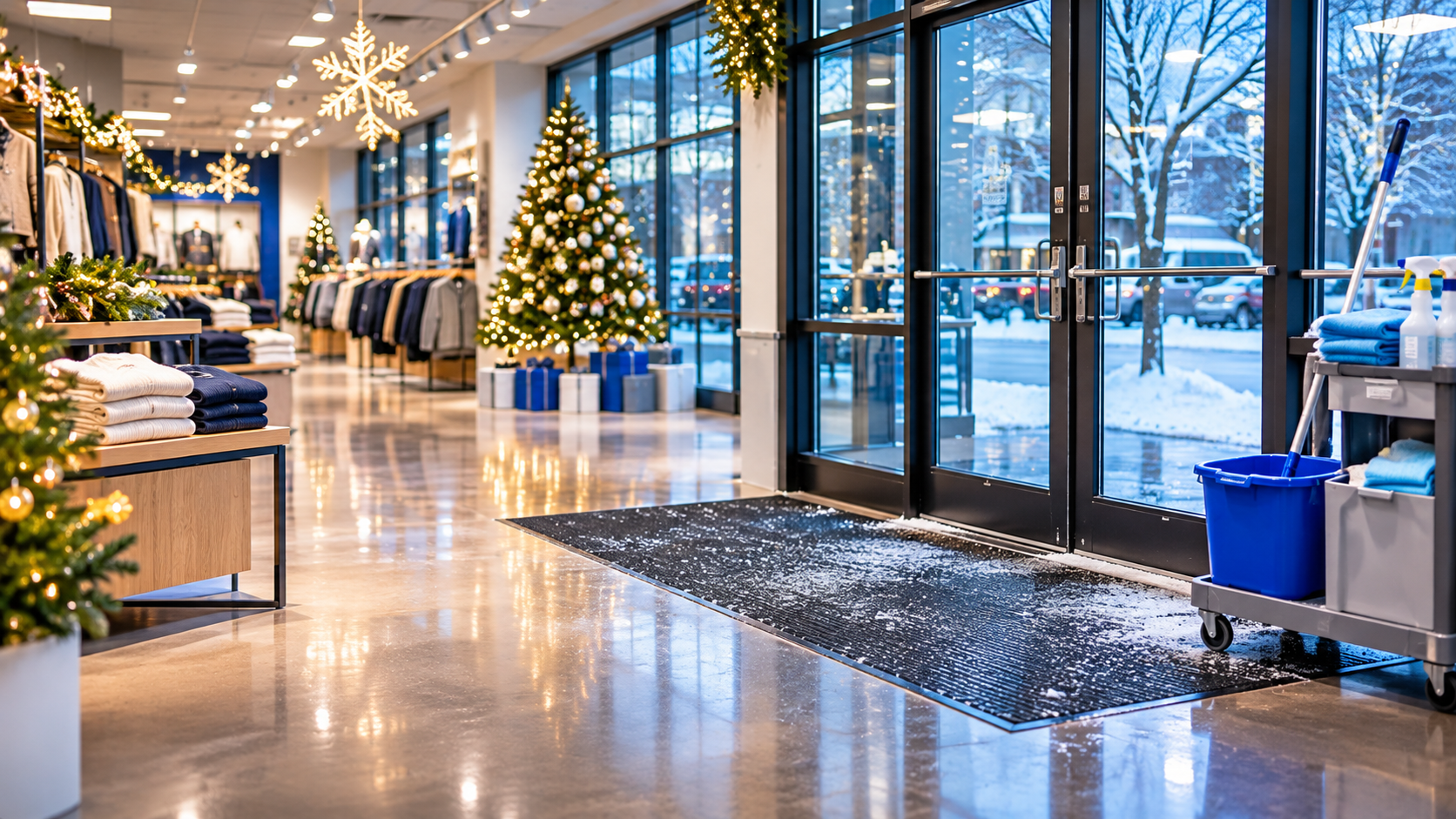
The holiday shopping season brings more customers, wet footwear, packaging debris and frequent contact with shared surfaces. For stores in Minneapolis, Saint Paul, Bloomington, Eagan and surrounding communities, snow and deicing salt add another layer of work. A cleaning routine that feels sufficient during a quiet week may leave a busy store looking neglected by midday. The solution is not simply to clean everything more often. It is to prioritize the spaces shoppers notice, match tasks to traffic patterns and schedule deeper work when the store is less crowded.
A practical plan protects presentation without interrupting sales. Start with a walk-through at opening, identify the highest-traffic zones and assign clear responsibilities for quick checks during business hours. Then reserve time for more thorough work before opening or after closing. The exact schedule should reflect your floor materials, store size, operating hours and customer volume.
Start at the Entrance: Your First Line of Defense
Use a Matting and Moisture-Control Plan
Entrances collect slush, grit and salt before those materials spread through the sales floor. Position suitable walk-off mats at exterior and interior transitions, keeping doors and accessible paths clear. Check mats frequently: a saturated mat can stop trapping moisture and may create a trip hazard. During storms, assign someone to inspect the entry more often and arrange safe removal of tracked-in water.
Salt residue is especially visible on dark tile and hard surfaces. Use cleaning methods and products approved for the floor manufacturer, rather than assuming one chemical is suitable for every finish. Prompt attention to wet spots matters more than making a floor look glossy. If a surface is damp after cleaning, use appropriate warning signs and keep customers away until it is safe.
Keep Glass and Door Hardware Presentable
Smudged entrance glass and fingerprints on handles are easy for shoppers to notice. Add quick visual checks of door glass, push plates and accessible touchpoints to the opening and midshift routines. Exterior window work may require a separate seasonal plan; our guide to commercial window cleaning explains how Minnesota weather influences scheduling.
Build a Sales-Floor Cleaning Checklist Around Traffic
Not every aisle receives the same wear. Focus first on checkout lines, promotional displays, fitting-room approaches, customer-service counters and main circulation routes. During open hours, use discreet spot cleaning for spills and loose debris. Schedule vacuuming, damp mopping or machine cleaning at quieter times when staff can safely control the work area.
For carpeted retail zones, remove dry soil regularly and respond to spills according to the carpet manufacturer's instructions. High-traffic lanes may need periodic extraction or other professional treatment, but over-wetting can delay reopening. Our commercial carpet cleaning guide covers scheduling and seasonal care for Minnesota businesses.
Protect Displays and Merchandise
Cleaning teams should understand which surfaces can be wiped, which products need special handling and which displays should not be moved. Establish a simple escalation process for spills near electronics, fragile merchandise or electrical equipment. Store employees can flag problem areas, while cleaners work from an agreed checklist that avoids disturbing inventory, signage and customer orders.
Give Restrooms and Checkout Areas Extra Attention
A busy retail restroom can change condition quickly. Check soap, paper products, waste bins, sinks, mirrors, fixtures and floors at intervals based on actual use. Document issues such as leaks, broken dispensers or persistent odors instead of masking them with fragrance. Cleaning and disinfecting are different tasks: follow product labels, required contact times and surface compatibility when disinfection is appropriate.
Checkout counters, payment areas and customer-service desks also deserve regular inspection. Coordinate with employees so cleaning does not interfere with transactions or damage payment devices. Use suitable products for electronics and avoid spraying liquid directly onto equipment. For a more detailed restroom workflow, see our commercial restroom cleaning checklist for Minnesota businesses.
Schedule Deep Cleaning Around Extended Store Hours
Holiday promotions may extend operating hours or compress the time available for maintenance. Identify tasks that cannot safely happen around shoppers, such as machine floor scrubbing, thorough carpet treatment and detailed work beneath fixtures. Plan those jobs for agreed access windows and confirm alarm procedures, entry instructions and who is responsible for securing the building afterward.
Before each service, note temporary displays, stock deliveries, newly installed fixtures and areas that need special attention. A brief handoff between store management and the cleaning team prevents confusion. For multi-location operators, a consistent checklist makes it easier to compare conditions across stores without pretending that every location needs the same frequency.
Prepare for Minnesota's Freeze–Thaw Cycle
Winter conditions are unpredictable. A sunny afternoon can follow a snowy morning, leaving alternating wet and dry residue at entrances. Keep a response plan for storms, track which zones become slippery and increase checks when conditions change. Coordinate indoor maintenance with whoever manages snow removal and exterior ice treatment; each affects the amount of material carried inside.
Hard floors may need different methods depending on whether they are tile, resilient flooring, sealed concrete or another material. Avoid abrasive approaches or aggressive chemicals that could compromise the finish. Our Minnesota winter floor-care article explains additional ways to reduce seasonal wear in commercial buildings.
How to Measure Whether the Plan Is Working
Use Simple, Observable Quality Checks
A good cleaning plan should be easy to evaluate. At opening and closing, check for visible debris, entrance moisture, overflowing bins, restroom supplies, streaked glass and unresolved spills. Record recurring trouble spots and adjust the schedule instead of repeating tasks that add little value. Encourage store managers to share feedback with specific locations and times, rather than vague reports that a store feels dirty.
For a larger retail operation, consider a weekly review of service logs, supply usage and incident reports. This can reveal whether holiday traffic calls for additional spot checks, a different after-hours schedule or a targeted deep clean. The goal is a consistently welcoming environment, not a one-time transformation that disappears after the next rush.
Plan Your Retail Cleaning With Diamond Cleaning Services
Diamond Cleaning Services LLC helps Minnesota businesses think beyond a generic cleaning checklist. Whether you manage a neighborhood shop, a busy showroom or a larger commercial facility, start by identifying your busiest areas, the floor materials involved and the hours available for service. Discuss a realistic scope and schedule before the holiday rush, then revisit the plan as traffic changes.
Explore our office cleaning schedule guide for more ideas about matching cleaning frequency to daily use, or contact Diamond Cleaning Services to discuss your facility's needs in the Minneapolis–Saint Paul area. More than clean. Diamond Quality.
More than clean. Diamond Quality.
Request a cleaning consultation