COMMERCIAL CLEANING · NOVEMBER 13, 2026
Commercial Restroom Cleaning Checklist for Minnesota Businesses
A practical guide to daily care, deep cleaning and winter readiness in the Twin Cities.
Why Restroom Cleaning Deserves Its Own Plan
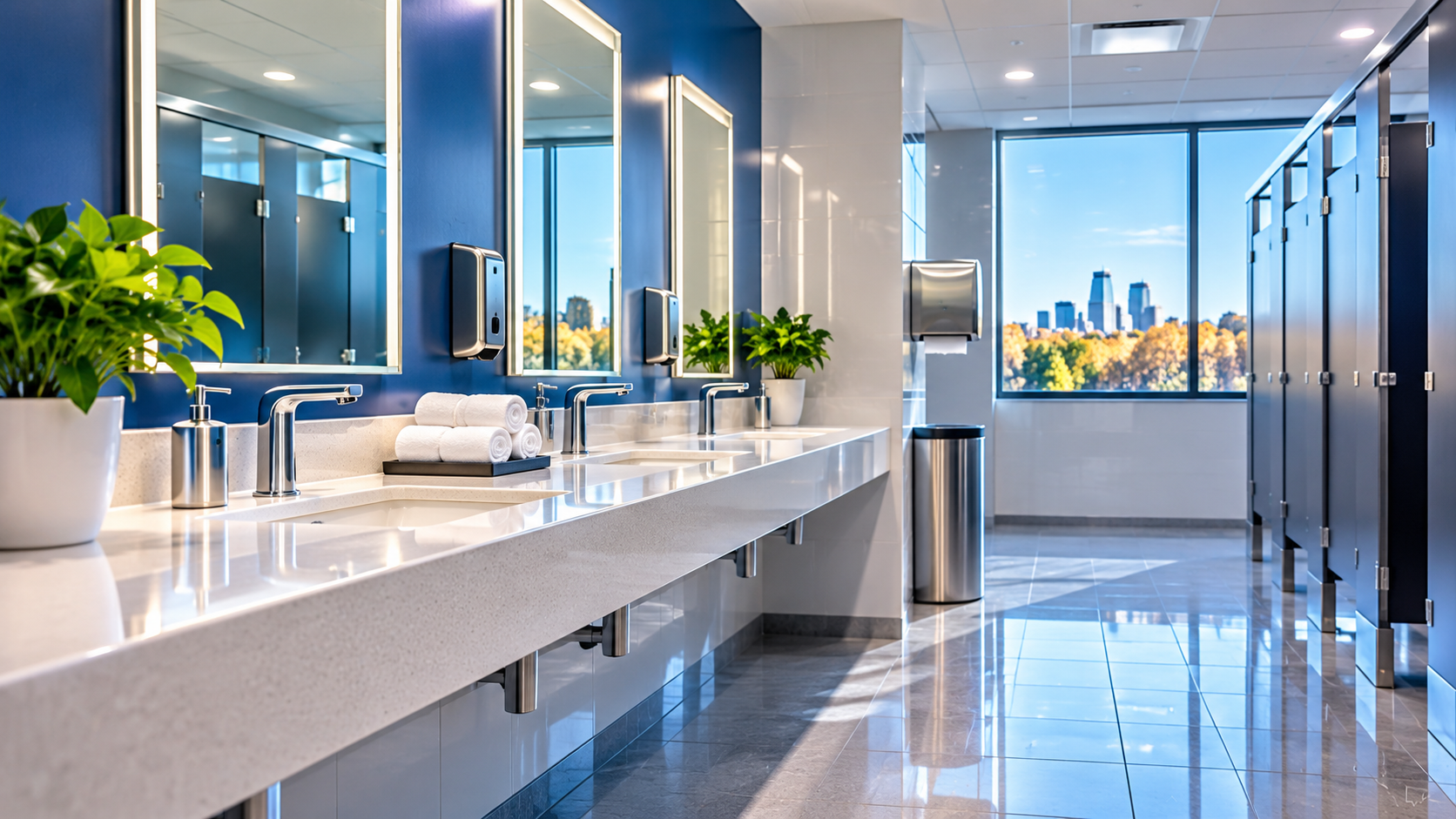
A restroom is one of the few places where customers and employees can immediately judge how carefully a facility is maintained. Empty dispensers, damp floors, persistent odors, and dirty touchpoints can undermine confidence even when the lobby looks spotless. For Minnesota businesses, winter adds another challenge: boots track in snow, grit, and deicing residue that quickly spread from entrances to restroom floors. A dependable program should address both appearance and the surfaces people touch most often. The goal is not simply to make the room smell clean. It is to maintain a practical, documented routine that supports a comfortable and welcoming workplace.
Start With a Daily Restroom Cleaning Checklist
Daily service should follow a consistent sequence so important details are not skipped during busy shifts. Begin by checking supplies and identifying visible hazards such as standing water, broken fixtures, or overflowing bins. Remove trash and replace liners before working on surfaces. Clean mirrors, counters, sinks, faucets, dispensers, partitions, and doors with products appropriate for their materials. Give toilets and urinals particular attention, including handles, seats, exterior surfaces, and surrounding areas. Finish with the floor, working toward the exit to avoid tracking dirt back across freshly cleaned areas. Keep cleaning equipment for restrooms separate from equipment used in kitchens or desks to reduce cross-contamination.
Focus on High-Touch Surfaces
Door handles, push plates, faucet controls, flush handles, stall latches, and dispenser buttons receive repeated contact throughout the day. These points may need additional attention between full cleaning visits, especially in restaurants, offices with shared facilities, and customer-facing locations. Cleaning removes soil; disinfecting is a separate step that requires a suitable product and the contact time specified on its label. Staff should follow the manufacturer's instructions and any applicable workplace procedures rather than assuming that a quick spray-and-wipe disinfects every surface.
Keep Consumables and Fixtures Reliable
Restroom quality is also about readiness. Check toilet paper, hand soap, paper towels, and other supplies before peak periods. Inspect dispensers for jams and report dripping faucets, running toilets, clogged drains, damaged caulk, or loose hardware. A cleaning team can identify many of these issues, but plumbing and repair work should be referred to qualified maintenance personnel. Simple reporting prevents small problems from turning into recurring complaints.
Build Weekly and Monthly Deep-Cleaning Tasks
Daily cleaning handles immediate needs, but some areas require scheduled detail work. Weekly tasks may include scrubbing grout lines where appropriate, cleaning the bases of toilets, wiping partition edges, removing buildup around faucets, and addressing corners that routine mopping misses. Monthly reviews can include vents, higher ledges, light fixtures within safe reach, and the condition of sealants and floor finishes. Frequencies should respond to actual use, not an arbitrary calendar. A lightly used office restroom and a busy retail restroom should not receive identical service plans.
Plan for Minnesota Winter Conditions
In Minneapolis, Saint Paul, Bloomington, Burnsville, and surrounding communities, winter moisture and salt residue create additional floor-care needs. Place effective walk-off mats near entrances, maintain them regularly, and increase floor checks when snow is melting. Use cleaning methods compatible with the restroom floor material; harsh products or excessive water can damage some finishes and leave slippery conditions. Display appropriate wet-floor signs during service and allow floors to dry before reopening the area. During spring thaw, review grout, transitions, and floor edges for accumulated residue.
Adjust Cleaning Frequency to Traffic
There is no universal answer to how often every commercial restroom should be cleaned. A small office may benefit from a full daily visit and a midday supply check. A high-traffic restaurant, dealership, or retail space may require multiple inspections and touchpoint cleanings each day. Consider occupancy, business hours, the number of fixtures, visitor volume, seasonal traffic, and recurring complaints. Start with a written schedule, then refine it using observations. A log of completed checks helps facility managers see patterns and make adjustments before problems become visible to customers.
Use a Simple Quality-Control System
A useful checklist identifies the area, task, frequency, responsible person, and completion time. Supervisors can periodically inspect floors, fixtures, odors, dispensers, and touchpoints rather than relying only on a signed sheet. Encourage employees to report issues without waiting for the next scheduled visit. Record repeated problems, such as a dispenser that empties early or a floor that stays wet, so the team can change its approach. This turns restroom cleaning from a reactive chore into a manageable facility process.
Choose a Commercial Cleaning Partner With Clear Standards
When comparing commercial cleaning providers, ask how they determine visit frequency, separate restroom tools, train employees on product labels, document inspections, and communicate maintenance concerns. Clarify whether supplies are included and how urgent requests are handled. Ask for a walkthrough of the facility before accepting a one-size-fits-all quote. A provider should be able to explain what is included in routine cleaning versus periodic deep cleaning, and how the scope changes with traffic or season.
Connect Restroom Care With the Rest of Your Facility
Restrooms do not operate in isolation. Entryway mats, corridors, breakrooms, and shared offices affect how quickly soil travels through the building. A coordinated maintenance plan can combine restroom service with office cleaning schedules, winter floor protection, and seasonal window care. For businesses with carpeted corridors, our commercial carpet cleaning guide offers additional planning tips. Coordinating these tasks can make inspections easier and keep expectations consistent across the property.
Request a Restroom Cleaning Plan for Your Minnesota Business
Diamond Cleaning Services LLC works with commercial facilities across the Minneapolis–Saint Paul area. Whether you manage an office, retail property, or another shared workplace, a site-specific conversation is the best place to start. Review your current traffic patterns, trouble spots, preferred service hours, and supply responsibilities. Then define a checklist that fits the building instead of relying on guesswork. Contact Diamond Cleaning Services to discuss commercial cleaning needs and request a tailored plan. More than clean. Diamond Quality.