Dealership Cleaning · November 2, 2026
Auto Dealership Cleaning Checklist for Minnesota Showrooms and Service Areas
A practical, customer-focused cleaning checklist for auto dealerships in Minneapolis, Saint Paul and surrounding Minnesota communities.
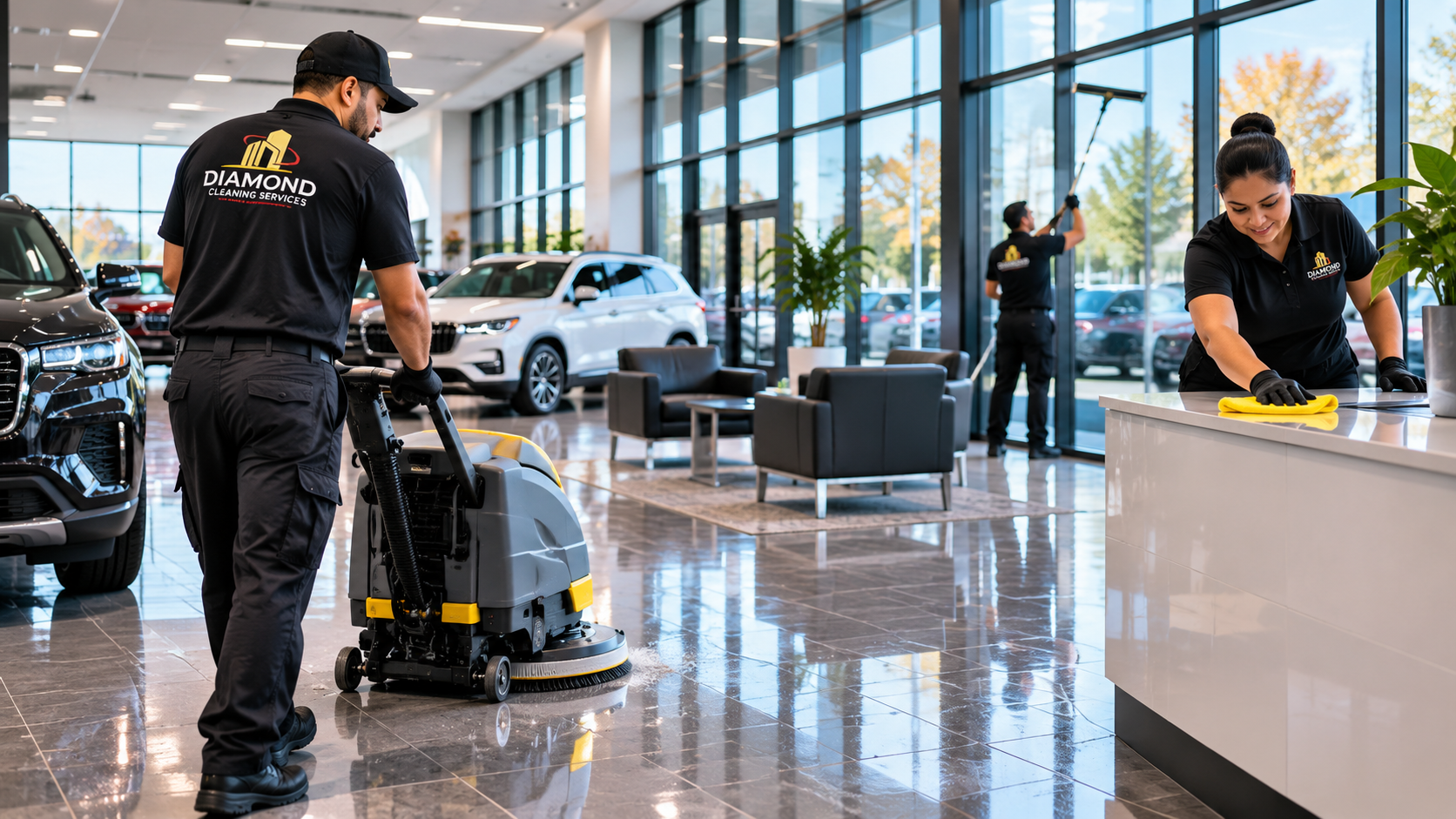
A customer may spend only a few minutes walking into a dealership before deciding how professional the business feels. Shiny glass, tidy waiting areas and well-maintained floors help create a welcoming first impression. Yet a dealership is not one uniform space: the showroom, service drive, offices and restrooms experience very different types of traffic.
For dealerships in Minneapolis, Saint Paul and surrounding Minnesota communities, winter adds wet shoes, road grit and deicing residue to the daily workload. A useful commercial cleaning checklist accounts for those conditions without treating every room the same.
Why Dealership Cleaning Needs Its Own Plan
A vehicle showroom is part retail environment, part workplace and part customer experience. People notice fingerprints on glass, debris near display vehicles, dusty reception desks and stained carpets while they wait for service. Behind the scenes, staff also need clean offices, breakrooms and shared facilities.
The most effective plan divides the building into zones, assigns practical cleaning frequencies and identifies who responds to spills during operating hours. That keeps routine janitorial work distinct from periodic projects such as carpet extraction and floor maintenance.
Showroom Cleaning Checklist: Focus on the Customer's View
Start at the front door and follow the path a customer takes. Inspect entrance mats, glass doors, reception counters, walkways around display vehicles and seating areas. Vacuum or clean visible debris before it spreads, and remove fingerprints from appropriate glass and touch surfaces.
Display vehicles may have specialized finishes and dealership-specific handling rules. Cleaning crews should follow the dealership's instructions about which surfaces and vehicles they may touch rather than assuming general building-cleaning products are suitable for automotive paint or interiors.
Entrances, Glass and High-Visibility Surfaces
Clean entrance glass and door handles as traffic requires. Pay attention to smudges on partitions, counters and customer-facing interior windows. Keep floor transitions and corners free of tracked-in debris. A bright showroom can make dust and streaks especially noticeable, so a final visual inspection matters.
Waiting Areas and Customer Touchpoints
Waiting rooms collect coffee cups, crumbs, fingerprints and packaging throughout the day. Include tables, seating-adjacent surfaces, trash receptacles and refreshment stations in the checklist. Coordinate with dealership employees so confidential paperwork, personal belongings and electronic equipment are not moved without permission.
Service Drives and Customer Drop-Off Areas
The service lane has different demands from the sales floor. Foot traffic, wet tires, outdoor debris and changing weather can make entrance zones messy quickly. Establish clear boundaries between customer-accessible areas and operational spaces where equipment, chemicals or moving vehicles may create hazards.
Use surface-appropriate methods and coordinate cleaning times with service managers. Ordinary janitorial teams should not handle automotive fluids or other hazardous waste unless that work is explicitly within their training, equipment and contracted scope.
Restrooms, Breakrooms and Employee Offices
Restrooms and breakrooms influence both customer comfort and employee experience. Set expectations for cleaning fixtures, sinks, counters, floors and frequently touched surfaces; restock consumables according to the agreed scope. Busy customer restrooms may need daytime checks in addition to scheduled evening cleaning.
Office areas often need waste removal, vacuuming and accessible-surface dusting. Ask employees to secure sensitive documents before service. The goal is a consistent standard without disrupting sales, finance or service operations.
Adjust the Checklist for Minnesota Winter
Snow, slush and road salt can move from parking lots into showrooms and waiting areas. Entrance mats help capture some debris, but they still require regular inspection and cleaning. Prioritize moisture removal, visible residue and high-traffic paths, especially after storms or during freeze-thaw conditions.
Use cleaning methods compatible with each floor finish. Some hard surfaces need specialized maintenance, while carpets may require targeted spot treatment and periodic extraction. A seasonal plan should respond to actual conditions rather than automatically increasing every task throughout the building.
Build a Daily, Weekly and Periodic Cleaning Schedule
A dealership cleaning checklist works best when it distinguishes routine presentation tasks from detail work and larger maintenance projects. Frequencies below are examples to customize after a walkthrough, not universal requirements.
Every Business Day or Every Scheduled Visit
Prioritize customer entrances, reception, waiting rooms, restrooms, waste removal and visibly dirty floor paths. Check glass and high-touch surfaces. If the dealership operates long hours, decide who handles mid-shift spills and restroom supply checks between professional cleaning visits.
Weekly Detail Work
Depending on traffic, schedule deeper vacuuming of less-used rooms, attention to baseboards and accessible ledges, interior glass detailing and conference-room cleaning. Review recurring problem spots with the manager so the crew can adjust priorities instead of repeating low-value tasks.
Periodic Specialty Services
Plan carpet cleaning, machine scrubbing, floor finish care and larger deep-cleaning projects around surface condition and business needs. A heavily used customer corridor may need attention sooner than a quiet administrative room. Confirm drying time, access restrictions and reopening requirements before work begins.
Coordinate Cleaning Without Interrupting Sales or Service
Dealerships often have early service appointments, evening sales activity and occasional events. A cleaning partner should know when customers arrive, which doors are available and which zones must remain open. Agree on key access, alarms, vehicle movement restrictions and a contact for unexpected issues.
After-hours service can reduce disruption, but it still requires clear instructions. Document what is included, what is excluded and how the team should report damage, spills or access problems.
Questions to Ask a Commercial Cleaning Provider
Before requesting a quote, describe the building's square footage, floor materials, hours, customer volume and priority areas. Ask whether the proposed scope separates showroom cleaning from service-area tasks, how quality will be checked and how seasonal changes will be handled.
Request a written checklist and a clear schedule for recurring and specialty services. Comparing scopes—not just prices—helps managers understand what each proposal actually covers and where extra work may be needed.
Commercial Dealership Cleaning Across the Twin Cities
Diamond Cleaning Services LLC provides commercial cleaning for Minnesota dealerships and other business facilities, including recurring janitorial work, carpet cleaning, floor care, window cleaning and deep cleaning. We can help build a plan around the spaces customers see and the areas your team uses every day.
Whether your dealership is in Minneapolis, Saint Paul, Bloomington, Lakeville or another nearby community, begin with a walkthrough and a realistic checklist. A clean, consistent facility supports the experience your customers expect.
Explore our commercial cleaning services, read our Minnesota winter floor-care guide, or request a free estimate for your dealership.
More than clean. Diamond Quality.